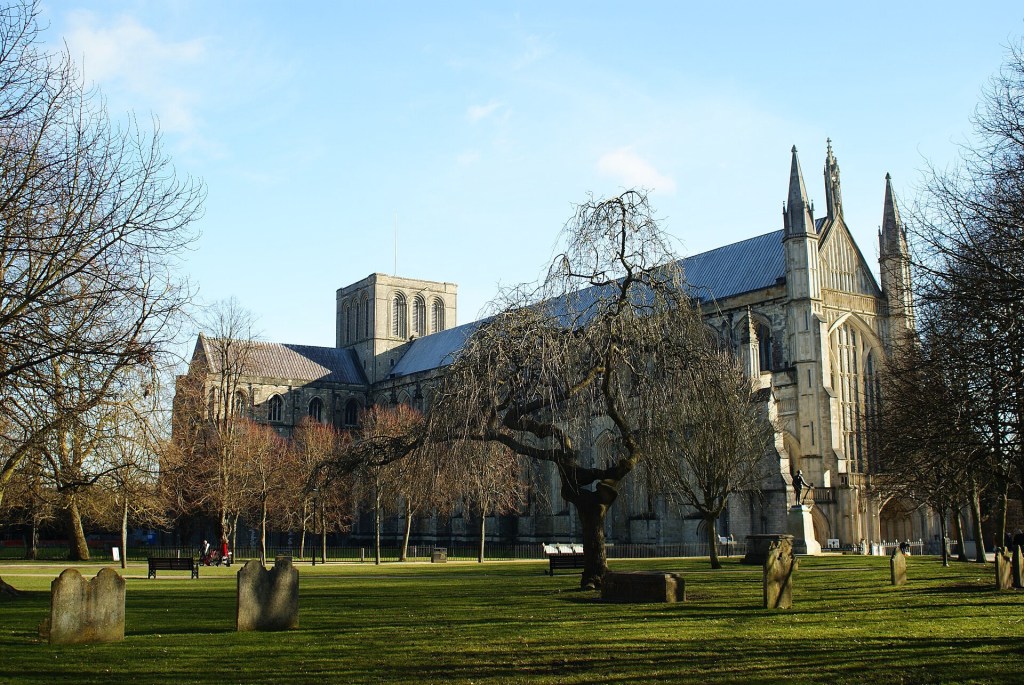
In Saxon times Winchester was England’s ancient capital and seat of kings. Small and compact it is a beautiful city full of history, legends and places of local interest. It’s one of my favourites.
Winchester
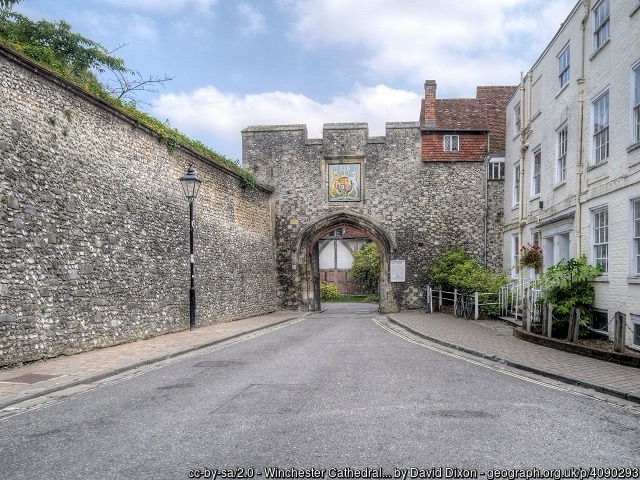
Evening light frames Winchester Cathedral, its nave is one of the longest in Europe. As the shadows lengthen across the Close, music from the psalms and canticles of choral evensong drifts out into this quiet place, as it has over the centuries. This is still a house of prayer with a daily routine of worship, as well as being the Mother church of the parish churches of Winchester diocese. The Bishop of Winchester is one of the most senior bishops in the Church of England. The doors of the cathedral stand open to welcome all visitors.
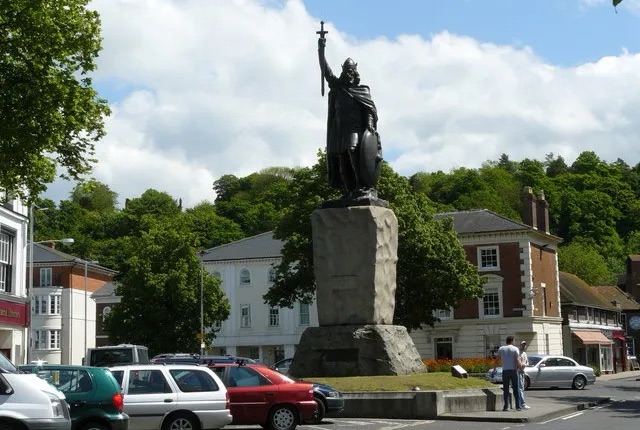
‘Alfred the Wise, the Good, and the Great!’
These words are written on the famous statue in Winchester built to mark the 1000th anniversary of Alfred’s death on October 26th, 899.
Alfred the Great
The story of Alfred the Great’s triumph over the Danes when all had seemed lost is one the greatest dramas of England’s history. Winston Churchill rated Alfred as the greatest figure in England’s history, not just for his victories, but also for his godly Christian reign. He was King of Wessex, the only kingdom to have resisted the Danish invasion. Alfred’s vision was for a united England which was achieved when his grandson Athelstan became the first king of all England in 927.
Alfred’s legacy today is alł around us. A united country with its own language of English and Common Law based upon the ‘shires’. Through his education reforms, promotion of literature and Christian faith Alfred breathed fresh life into Anglo-Saxon England.
King Arthur?
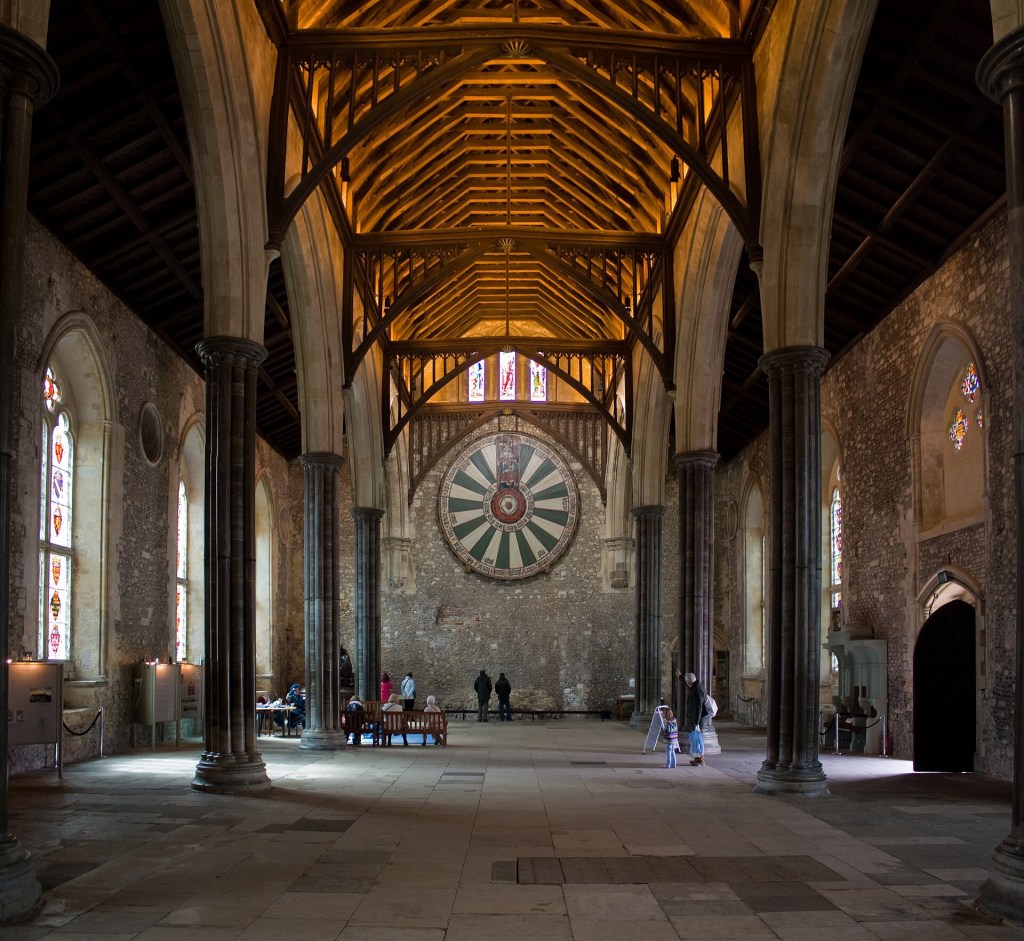
The grand interior of the Great Hall – the most complete surviving 13th-century aisled medieval hall in England. It was built iii 1232 by order of King Henry III. It is the only significant remaining structural part of the medieval Winchester Castle, which was originally founded in 1067 by William the Conqueror. Hung on the wall is the huge wooden table said to be linked with the legendary King Arthur.
Another legend is of St Swithin, the saint who was buried outside the cathedral walls at his own wishes, but whose over-enthusistic followers had his remains dug up and brought inside the building. It is said that, as if in protest, the rain didn’t stop for 40 days, leading to the weather lore legend:
St Swithun’s day (July 15th) if thou dost rain
For forty days it will remain
St Swithun’s day if thou be fair
For forty days ’twill rain nae mareA Buckinghamshire variation has:
“If on St Swithun’s day it really pours
You’re better off to stay indoors.” !
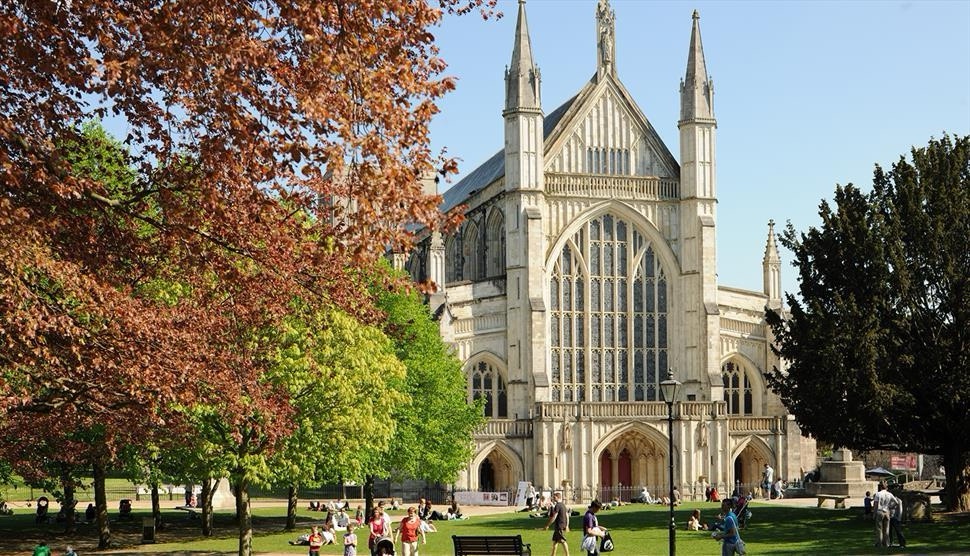
There are many illustrious names among those buried in the cathedral, but sadly Alfred the Great‘s is missing. He was said to have been buried in the old Saxon Minster, but the Normans destroyed the Minster when they built their massive Norman cathedral. Alfred’s grave has yet to be discovered.
A verger at the cathedral in the 1820’s was surprised so many visitors were coming to visit one grave of a woman called Jane Austen. There was no indication on the tablet marking Jane‘s grave that she was a famous author. Now she’s known by millions worldwide!
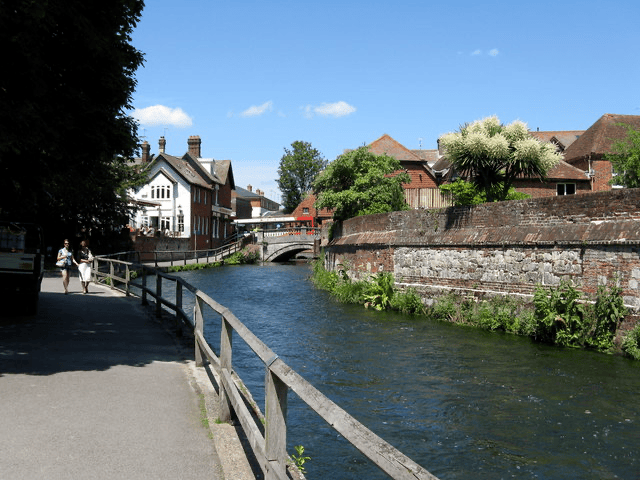
Another literary figure associated with Winchester is the poet John Keats. It was while staying here that he wrote his famous poem ‘To Autumn’.
Taking one of his daily walks along the river Itchen at Winchester on September 19th he was inspired by the autumn landscape and wrote to his friend:
“How beautiful the season is now—How fine the air—a temperate sharpness about it… I never lik’d stubble-fields so much as now—aye, better than the chilly green of the Spring. Somehow, a stubble-field looks warm, in the same way that some pictures look warm – – this struck me so much in my Sunday’s walk that I composed upon it.
How glad we are that he did.

