
A few of my own rough sketches of Sussex-by-the-Sea with its glorious downs and sea coast, loved by Rudyard Kipling. His Sussex writing reveals a picture of a ‘much storied’ England of the past.
Rudyard Kipling
I have always enjoyed Kipling’s poems Sussex and The Run of the Downs as well as his stirring poem ‘If’. Now having retired to Sussex I share more fully his love of this place.
Kipling’s Kim and his Jungle Book about the “wisdom of the jungle’ with Mowgli and the elephants were based on his early years in India. After moving to Sussex he began writing about his new home. Many of his stories for children began as bedtime stories for his own children:
‘In the evening there were stories meant to put Effie to sleep, and you were not allowed to alter those by one single little word. They had to be told just so or Effie would wake up and put back the missing sentence’.
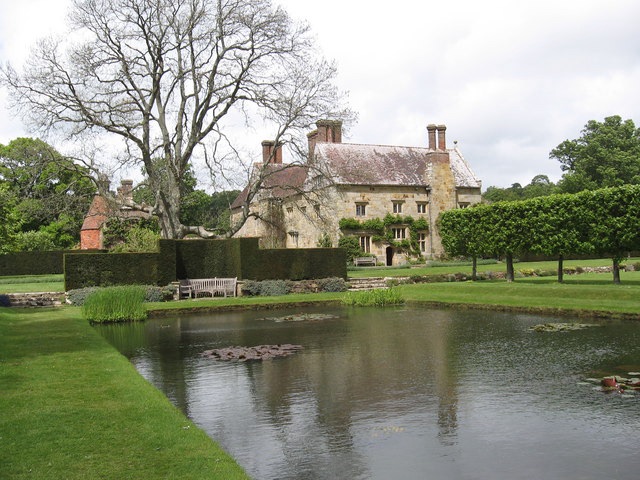
‘And so was England born‘
At Bateman’s (above photo), Kipling’s beloved home near Burwash, he treasured the history of the Sussex fields and hills around him. His vivid sense of place and history are clear in his ‘Puck of Pook’s Hill’ tales,
The tales feature the appearance of figures from the past layers of the history of Sussex, linked especially with the influence of the centuries-old Wealden iron industry. Names and places ring back through England’s history: Trafalgar, King Phillip’s fleet ( the defeated Spanish Armada), Domesday, Saxons, Harold, Alfred, Caesar, the Neolithic flintmen of the Downs and back to the Arthurian legends of the past. This wonderful old poem is the preface to the book:
Trackway and Camp and City lost,
Salt Marsh where now is corn-
Old Wars, old Peace, old Arts that cease,
And so was England born.She is not any common Earth,
Water or wood or air,
But Merlin’s Isle of Gramarye,
Where you and I will fare.
Listen to the full poem here:

The Eastern Downs, Kipling’s ‘Our blunt, bow-headed, whale-backed Downs’,
always With the ‘Blue goodness of the Weald‘ in the distance.
The South Downs
Our blunt, bow-headed, whale-backed Downs,
Bare slopes where chasing shadows skim,
No tender-hearted garden crowns,
No bosomed woods adornBut gnarled and writhen thorn—
And, through the gaps revealed,
Belt upon belt, the wooded, dim,
Blue goodness of the Weald.From Kipling’s poem ‘Sussex’

The Weald is good, the Downs are best –
I’ll give you the run of ’em, East to West……
…..Ditchling Beacon and Chanctonbury Ring
They have looked on many a thing,………The Downs are sheep, the Weald is corn,
You be glad you are Sussex born!From Kipling’s ‘The Run of the Downs‘

Chanctonbury Hill with its topknot of trees. A steep climb with a wonderful reward at the summit to see the expansive view across the Weald.

Sussex-by-the-Sea
(Above) Our own local River Arun seen from the Black Rabbit pub a mile upstream from Arundel with its imposing Norman Castle ( First built in 1068).
This county, like so many others, is full of history. Traces of Old England can still be found here. Having retired to Sussex for the past 21 years it has become our home and we love it.
God gives all men all earth to love,
But since man’s heart is small,
Ordains for each one spot shall prove
Beloved over all
Each to his choice, and I rejoice
The lot has fallen to me
In a fair ground—in a fair ground—
Yea, Sussex by the sea.From the poem ‘Sussex’
Kipling’s work is rather forgotten today though the poet T.S.Elliot rated Kipling’s writing highly. But Kipling’s poems about Sussex are still popular. See more at The Kipling Society.
 A Listening Heart
You’re a talented artist Richard!
LikeLike
Hardly, Andrea! But thank you. A photograph takes a mere click. But sketching/painting requires time and effort. Ii means getting involved with the scene and studying the details. A reminder of a special place at a more personal level. Who can resist trying to sketch these glorious Downs.
LikeLike