
John Clare was far from being just a simple country poet. This recently published collection of his work shows him as both naturalist and nature writer, as well as unparalleled poet. Following Clare through this book brings back memories of being young again out exploring the countryside of my native Berkshire.
John Clare – the Naturalist
May
Yet summer smiles upon thee still
Wi nature’s sweet unaltered will
And at thy births’ un-worshiped hours
Fills her green lap wi swarms of flowers
To crown thee still as thou hast been
Of spring and summer months the queen.From Shepherds Calendar – May
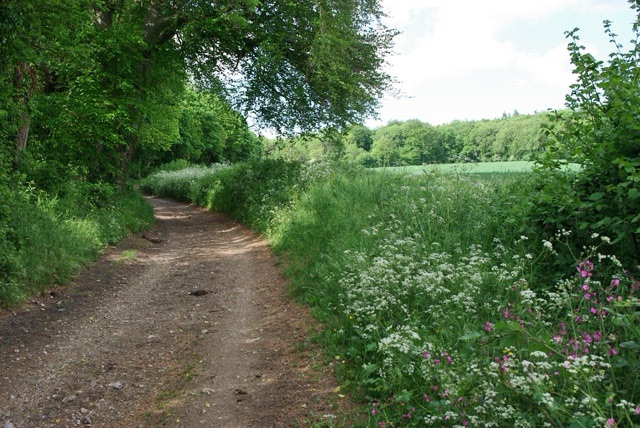
The cow parsley is everywhere, common but charming, the sign of May, as beautiful as its popular name Queen Ann’s Lace. A curving path carries our eye invitingly past the wood to a distant view of open fields and woodland. John Clare would have walked a lane like this studying every detail in these banks along this woodland edge, listening for every movement in the grass, each smell and each sound from the woodland.
Clare – the Nature Writer
Clare was a prolific writer. He read widely the nature writings of others like Gilbert White and corresponded with other naturalists. It was Gilbert White’s Natural History of Selbourne that inspired him to start his own Natural History of Helpston.
His writing shows his delight at being with the wild things that were his friends;
I grew so much into the quiet love of nature’s presence that I was uneasy except when I was in the fields…..Birds, bees, trees and flowers all talked to me, incessantly louder than the busy hum of man.”
From Clare’s unfinished Natural History of Helpston.
Clare – the Poet
‘To look on nature with a poetic eye magnifies the pleasure she herself brings, the very essence of the soul of poetry.‘
in the luscious beauty of spring Clare felt the sense of Nature ‘keeping holiday’ with him. Surrounded by a beautiful natural world poetry was never far away for him:
‘The poet strolls out in the divinity of the fields, catching at flowers and budding twigs for very joy and lolling over an old gate wreathed with Ivy by the fingers of many springs return. He gazes in the madness of rapture, and every thought he feels is the essence of poetry inspired by the lovely object surround him’
From The Natural History of Helpston
The rich brown amber hue the oaks put on
With their young leaves when every storm is gone
Is rich and beautiful, so past the power
Of words to paint in that luxuriant hour
When on a mossy rail I sit to mark
The different tinge of leaves and freshing bark.
And spell struck by the beauty which i see
Nature seems keeping holiday with me.’From Wood Pictures in Spring
Clare knew and loved every bush and path around his village and he describes them in intimate detail, especially in his Journal. He takes us by the hand and we scramble on hands and knees into a bramble thicket to see a precious nest hidden in secrecy. Then with the utmost reverence he bids us quietly leave this sacred spot in peace without trace.
It is a huge shame that for so long these writings have languished largely unknown until recently. They remind us of how much wildlife we have lost since John Clare’s day.
 A Listening Heart
Thank you Richard .
Beautiful words and stunning pictures.
Elizabeth Nicholl
LikeLike
Thank you for your comment Elizabeth. A very warm welcome to this blog.
LikeLike
Thank you for sharing those inspiring words and pictures Richard.
LikeLike
Thank you Andrea.
LikeLiked by 1 person