Who could resist writing a children’s story in a Lakeland scene like this? Beatrix Potter couldn’t. As she said:
“There is something delicious about writing the first words of a story. You never quite know where they’ll take you.”
Beatrix Potter – Storyteller
Beatrix Potter would be amazed at where her stories took her. Today, children the world over are still drawn to them with their exquisite illustrations and delightful storytelling.
Looking at the map of Near Sawrey, Beatrix Potter’s home, you see intriguing names like Dub How Farm, Far Storey and Cuckoo Brow Wood, places that seem to draw out inspiration for story telling.
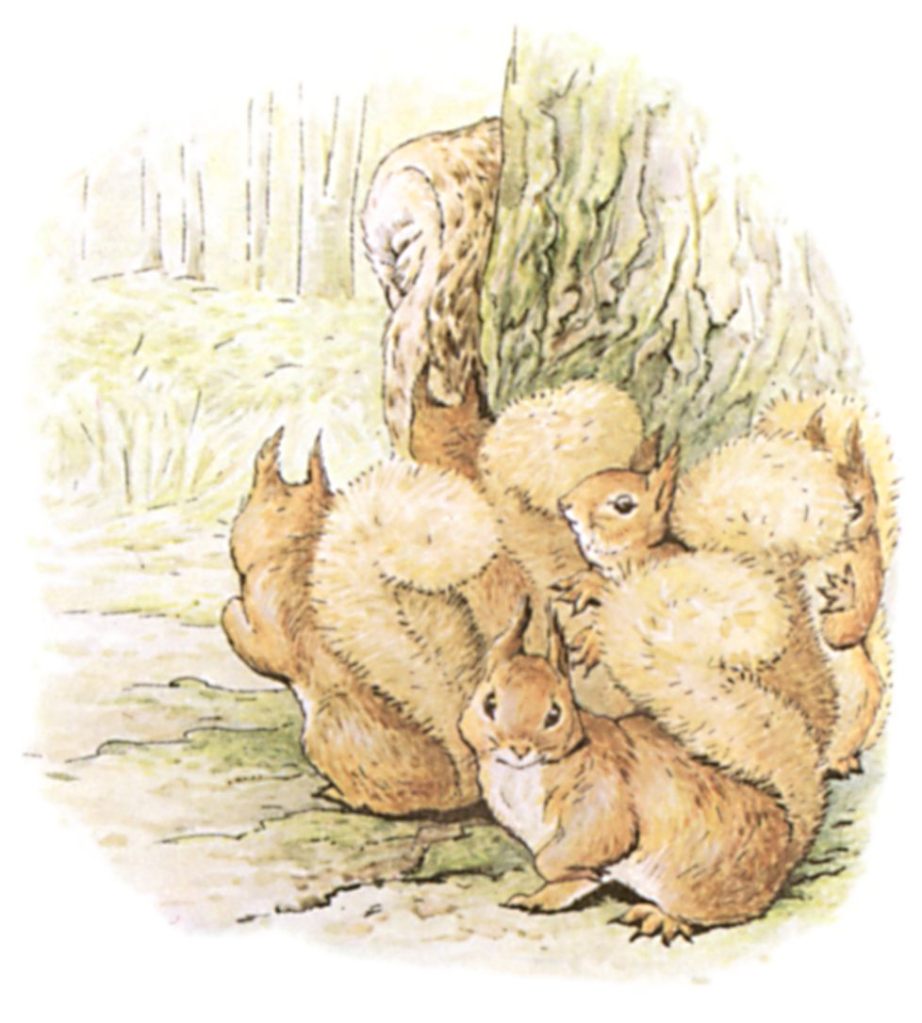
The top scene (by David Dixon – geograph) is of Derwentwater and Derwent Island, with Cat Bells in the background. Beatrix Potter made many sketches of the wooded shores of the lake and used them in her second book, ‘Squirrel Nutkin‘, which was published in August 1903. As usual her stories and their illustrations came from meticulous preparations.
Nutkin was that “excessively impertinent” squirrel, with his riddles and cheeky behaviour. Beginning a story involving him you never know where it will go. Unexpected things happen. There will probably be trouble!
Then all at once there was a flutterment and a scufflement and a loud “Squeak!”
The other squirrels scuttered away into the bushes.
When they came back very cautiously, peeping round the tree–there was Old Brown sitting on his door-step, quite still, with his eyes closed, as if nothing had happened.
But Nutkin was in his waistcoat pocket!
This looks like the end of the story, but it isn’t.
Indeed it wasn’t. Nutkin managed to escape, but only just! Beatrix Potter went on to create 21 more stories. Her own favourite, and mine too, was The Taylor of Gloucester.
This much visited garden became the inspiration for Beatrix’s forth story- Jemima Puddle-duck. Shortly before the tragic death of her newly engaged fiance, Norman Warren, she had bought this run down Hill Top Farm, in the Lakeland village of Near Sawrey, putting in a tenant farmer to run it for her. It was her introduction to Lakeland sheep-farming life. She called the village:
‘A near perfect little place as ever I lived in.’
Botanical Artist
But Beatrix Potter was more than just a story teller for children.
She always had a scientific interest especially animals and plants. Her botanical studies of fungi involved detailed drawings. In her twenties she discovered how fungi reproduce and wrote a paper to be read at London’s Linnaean Society. But, shamefully, because she was a young woman, she did not receive the credit that was due to her. Later she left her botanical drawings to the Arnott Museum in Ambleside. Some of them were included in the 1967 book ‘Wayside and Woodland Fungi by W.P.K. Findlay.
Farmer, Landowner, Conservationist
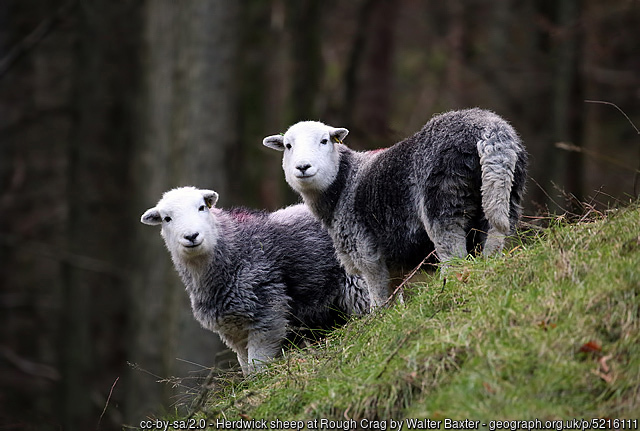
Beatrix raised her own flocks of Herdwick sheep and bought up more run down farms restoring them under tenant farmers. As a great supporter of the infant National Trust at her death in 1943, she left the Trust 17 farms—a total of approximately 4,000 acres.
Popular Tarn Hows with Weatherlam in the distance – reminding me of a very wet and misty climb years ago! In the Lake District it often rains! This was land owned by Beatrix Potter.
Beatrix Potter -A remarkable woman
In an age of male dominance she overcame much prejudice. Even her publisher F. Warne and Co were hesitant about publishing her first story, Peter Rabbit. However on publication it was an immediate success selling 8000 copies. Today her stories full of simplicity and charm have delighted children the world over.
She was a gifted artist, delightful storyteller, scientist, successful business-woman, farmer, landowner and conservationist. She was a true lover of her Lakeland, helping to preserve it as a working landscape, not just a place of tourism.
In Ambleside, I met an old man who had known Beatrix Potter, and who told me the “tramp story.” One rainy winter’s day, dressed as she liked to, in the opposite of high fashion, Beatrix encountered a tramp on a high road near Hill Top. He assumed her to be of his tribe, and greeted her with, “Brave hard weather for the likes of thee’n me, missus.” She had done the thing she’d always wanted – merged with her countryside.
Frank Delaney
Today the Victoria and Albert Museum has the largest collection of Beatrix Potter’s work and held an exhibition last year, ‘Drawn to Nature’ . Also, The Beatrix Potter Society website is full of interesting information.





 A Listening Heart