
Hidcote Manor Garden and nearby Kiftsgate Court are two of the most visited gardens of England. These two Cotswold gems are both over 100 years old, but still as beautiful as ever.
Hidcote Manor Garden
Entering the garden, the warmth of the 17th century Cotswold stone Manor house greets you as you begin to explore the gardens that surround the house. This famous garden started in 1907 by the Anglo-American Lawrence Johnson still attracts thousands of visitors.
Here, (the above photo by David Dixon – Geograph) the house is seen from the ‘Old Garden’, the first to be planted around the original cedar tree. Within the enclosed hedges the planting is full of interest in an exuberant fullness.
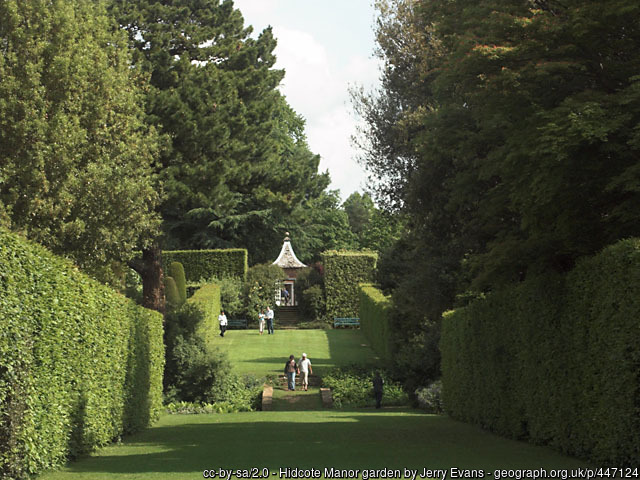
Two main long vistas E/W and N/S, which form the basic structure, are surrounded by garden ‘rooms’ packed full of interest. Johnston was a pioneer in the use of these.
Walking through the garden rooms, each enclosed with its neat yew hedges, you will find borders with shrubs and herbaceous plants packed with colour, garden pools with fountains, clipped yew topiary. Narrow paths lead to secret corners for the discerning gardener to look for unusual plants. A stylish formal pool filled with waterlilies and a large open-sided plant conservatory are popular with visitors. There are also open lawns with space for children to run around and for picnics.
You can understand why Vita Sackville-West described Hidcote as “a jungle of hap-hazard beauty controlled by a single mind. Neither by hap nor by hazard”
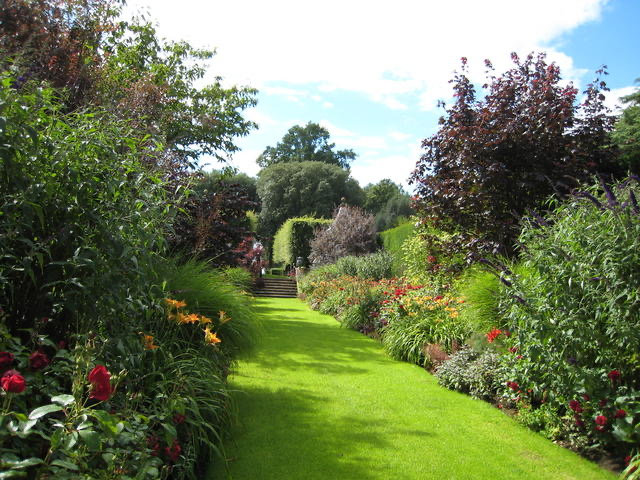
The classic red borders, for which Hidcote is famous, are backed by a graceful pair of classical gazebos. The garden designer Chris Beardshaw won a gold medal and the coveted People’s Choice Award at the Chelsea Flower Show in 2007 with a display garden to celebrate Hidcote’s centenary. It was based on these Red Borders.
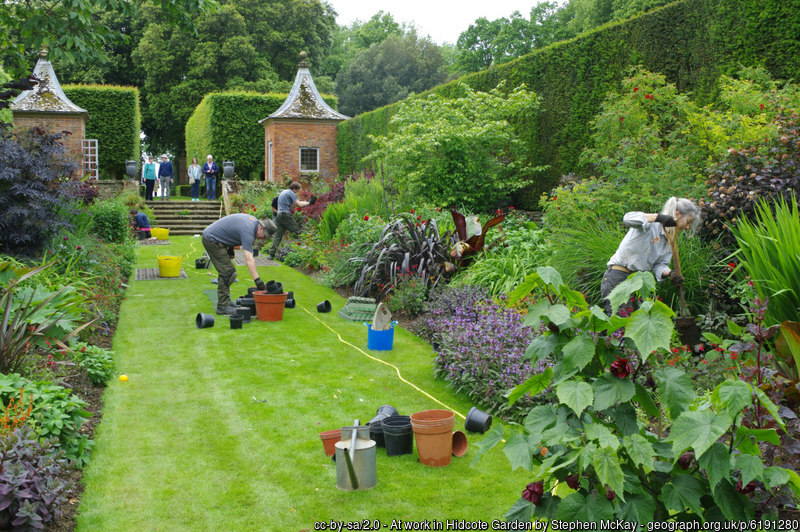
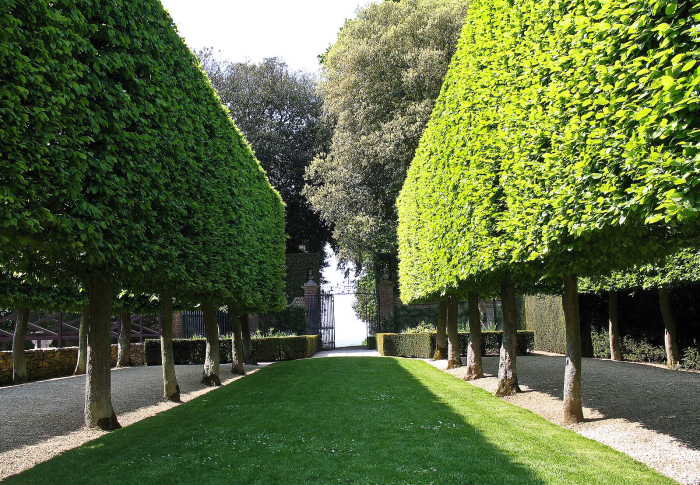
There’s plenty more work for the gardeners here. These immaculate stilt hedges lead the visitors eye towards the grand view beyond the gates.
The garden includes many unusual trees and shrubs some introduced by Johnson from his many plant hunting expeditions. He introduced over 65 plant species to Britain – 24 of which now bear either his or his garden’s name. He bequeathed Hidcote Manor and its gardens to the National Trust in 1947.
But a few photos can’t do justice to such a beautiful garden. This short 5 min video gives a helpful visitor’s view:
Kiftsgate Court Garden
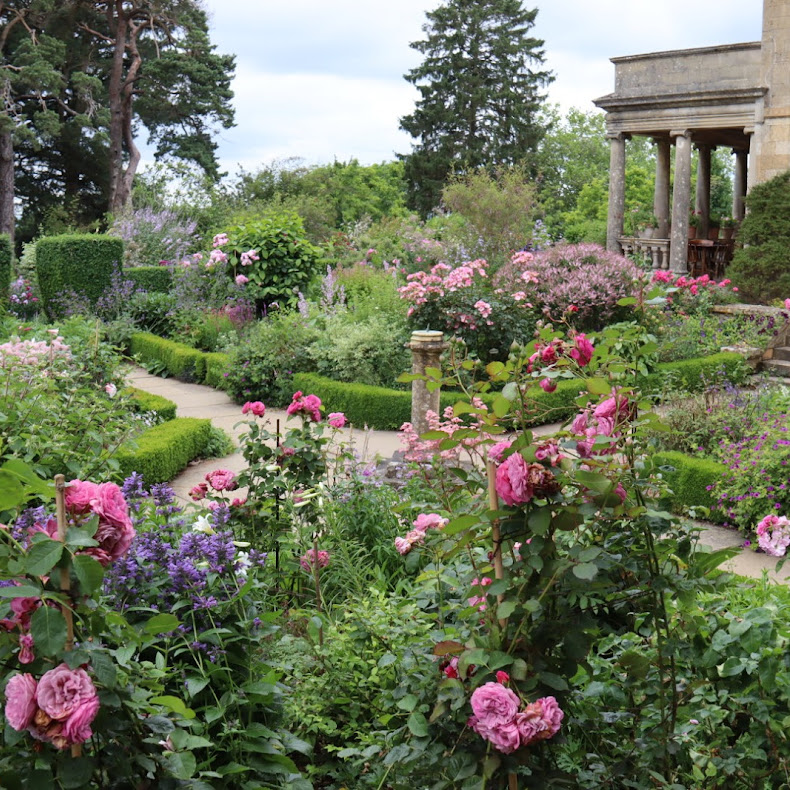
Just half a mile along the lane, Kiftsgate is best known for its timeless elegance and its superb collection of fragrant old-fashioned roses. Here, against the background of the house, roses fill the box edged borders and spill over the paths together with nepeta, lavenders, campanulas and hardy geraniums. Stepping stone paths curve invitingly around corners leading to more enchanting borders creating a mid-summer ‘poetry’ of plants, pastel pinks, purples, lavenders, blue, cream and white. Some say this is one of the loveliest of gardens open to the public.
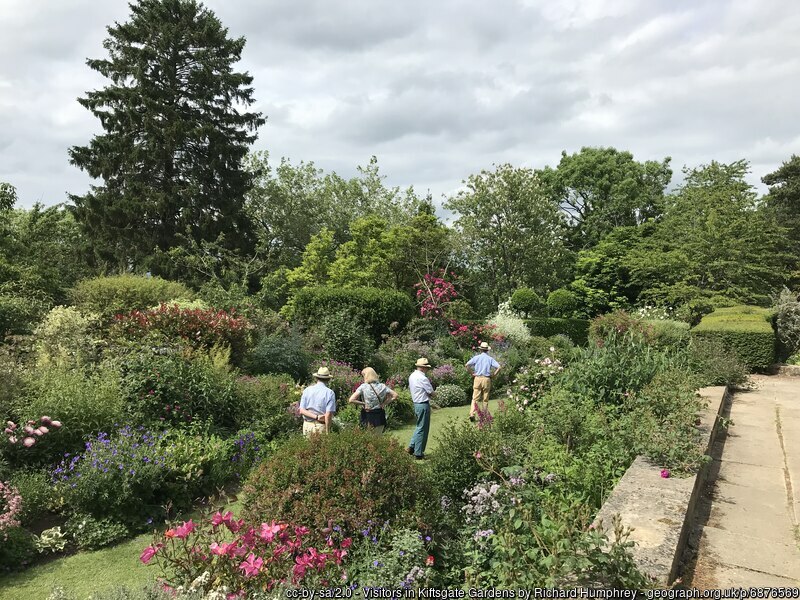
Unlike Hidcote, run by the National Trust, Kiftsgate is privately owned. It has a relaxed family feel. Heather Muir created the garden in 1919, In the mid 1950’s she passed it on to her daughter Diany Binney who developed the garden and first opened it to the public. Heather Muir’s granddaughter Anne Chambers and her husband are the present owners.
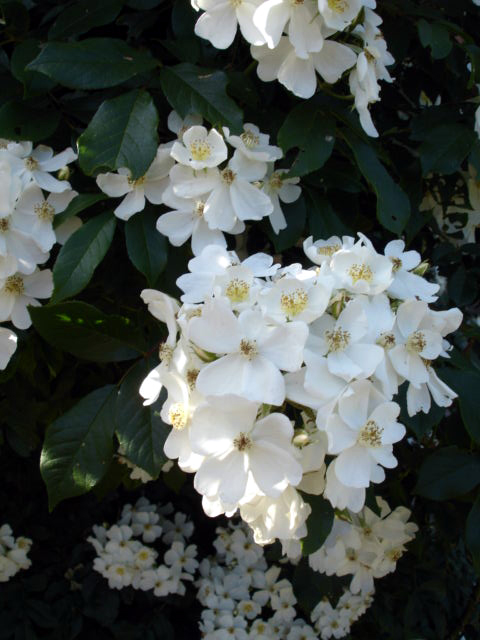
Kiftsgate is famed for the very vigorous rambling rose, Rosa filipes ‘Kiftsgate’ It is beautiful but beware. If allowed this rose can take over your garden!
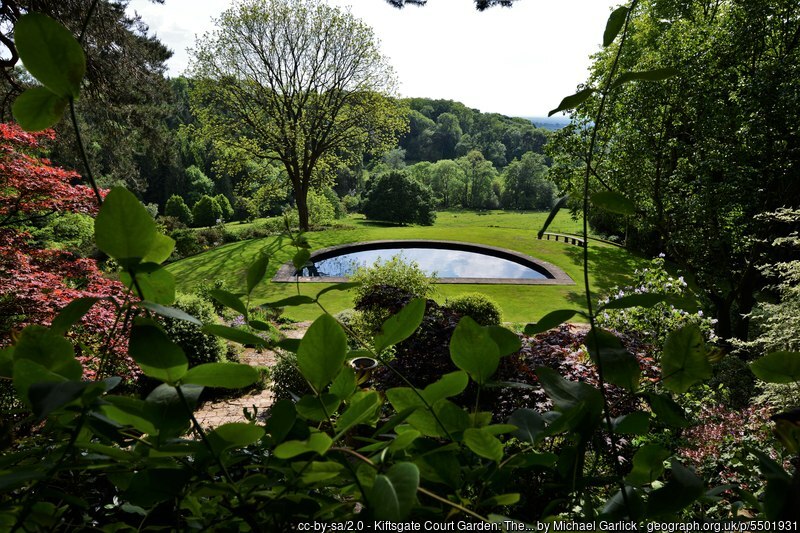
Like Hidcote, Kiftsgate features the same dramatic views looking over the Severn valley towards the distant Malvern Hills.
These two great gardens being so close enhance each other beautifully.
Garden visitors here in the Cotswolds are spoiled for choice. Both gardens are a dreamy reminder of a more gracious past. The peace of an unspoiled Eden is here.
 A Listening Heart